

Is Moving to Dallas a Good Idea? Local's Guide
Dallas Relocation, Moving To Dallas, Dallas Living Guide, Cost Of Living Dallas
Is Moving to Dallas, TX a Good Idea? An Honest Local’s Guide
Thinking about a Dallas relocation and wondering what life is really like here? This Dallas living guide walks you through the good, the bad, and the hot-as-heck summers so you can decide whether moving to Dallas is actually a good idea for you.
So… Is Moving to Dallas, TX a Good Idea?
The honest answer: it depends on what you’re looking for. Dallas offers a strong job market, relatively reasonable housing compared with coastal cities, and a buzzing urban-suburban mix. At the same time, it has real drawbacks: car dependence, intense heat, rising costs in some neighborhoods, and noticeable inequality from one side of town to the other.
City surveys back this mixed picture. In the City of Dallas 2026 Community Survey, about 72% of residents rated overall quality of life as “excellent” or “good”, and 76% felt positively about Dallas as a place to live. At the same time, a meaningful minority rated it only “fair,” and some external surveys put Dallas near the bottom of major Texas cities for satisfaction. In other words, many people thrive here—but not everyone does, and your experience will depend heavily on where and how you live.
📌 Key Takeaway: Moving to Dallas is a good idea if you value job opportunities, a big-city feel, and relatively moderate costs—but you’ll need to choose your neighborhood carefully and be realistic about the heat and commuting.
Dallas Relocation Basics: What Newcomers Should Know
A successful Dallas relocation starts with understanding the city’s layout and lifestyle. Dallas is the anchor of the larger Dallas–Fort Worth (DFW) metroplex—a sprawling region of suburbs, bedroom communities, and business hubs. You’ll hear locals talk just as much about Plano, Frisco, or Arlington as they do about Dallas proper, because work and social life often spill across city lines.
Neighborhood variety: Urban lofts in Uptown, historic homes in Lakewood, artsy vibes in Deep Ellum, and walkable charm in the Bishop Arts District—plus endless suburban options with bigger yards and top-rated schools.
Car culture: Public transit exists (DART buses and light rail), but most residents still rely on a car for daily life, especially outside central neighborhoods.
Climate reality: Summers are long, hot, and often humid. Triple-digit days are normal. Winters are usually mild but can bring the occasional ice storm that shuts everything down.
💡 Pro Tip: If you’re serious about moving to Dallas, visit in July or August, not just in spring. You’ll get a realistic feel for the heat you’ll live with most of the year.
Cost of Living Dallas: What You’ll Really Pay Each Month
Let’s talk numbers, because any Dallas living guide is incomplete without a clear look at the budget side. The Cost Of Living Dallas picture in 2026 is best described as moderate but rising, with housing still more affordable than many big coastal metros, but utilities and some everyday costs creeping up.
Typical Monthly Costs for Singles and Families
Pulling together several recent sources, you can expect:
Single person: roughly $2,300–$3,100 per month all-in, depending on lifestyle and neighborhood. Wise puts a single person at about $3,089/month, while Expatistan and LivingCost.org estimate between $2,472 and $2,819.
Family of four: around $5,000–$5,400 per month, according to Expatistan, LivingCost.org, and Salary.com data.
The big swing factor is housing. According to Wise and Numbeo, a one-bedroom apartment in central Dallas typically rents for $1,700–$1,800 a month, while outside the center you’re more likely to see $1,400–$1,450. Zillow’s 2026 figures show an average rent around $1,630/month across the city, and an average home value of about $362,000, with total monthly ownership costs (mortgage, taxes, insurance, maintenance) around $2,541.
How Dallas Compares to the U.S. Average
Most cost-of-living tools place Dallas at right around the national average. CostOfLivingData.com gives Dallas an index of 101 (with 100 being the U.S. average), while RentCafe and Apartments.com estimate the overall cost at 1–2% lower than the national norm. Housing tends to be about 10–12% cheaper than average, but utilities run roughly 12–13% higher, which makes sense given the heavy air conditioning use in summer.
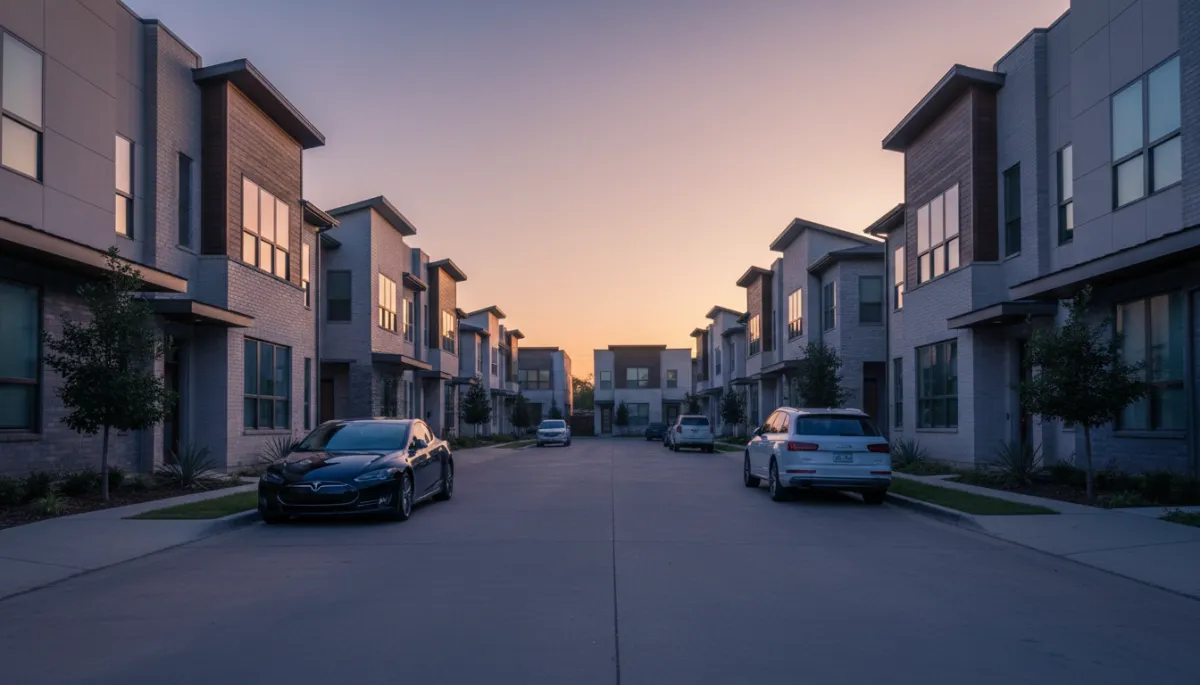
Housing is generally cheaper than coastal cities, but utilities and summer cooling add up.
For groceries, Wise estimates about $404 per month for a single person, with dining out around $241. Monthly utilities for an average apartment sit near $225, plus roughly $70–$75 for internet. A monthly public transit pass is around $120–$130, though many residents simply budget for gas, insurance, and parking instead.
💡 Budgeting Tip: If you’re relocating from New York, San Francisco, or Los Angeles, Cost Of Living Dallas will likely feel refreshingly manageable. If you’re coming from a smaller Midwest or Southern city, expect housing to be higher but still within reach if your salary adjusts upward.
Job Market and Economy: Why Many People Are Moving to Dallas
One of the biggest reasons moving to Dallas is on so many people’s radar is the strong job market. The region has become a magnet for corporate relocations and expansions, especially in technology, finance, healthcare, logistics, and telecommunications. Companies like AT&T, Texas Instruments, and Southwest Airlines have a major presence, and plenty of newer tech and fintech players have followed.
Recent data from Wise and Numbeo suggest an average net monthly salary between $4,400 and $4,800, which lines up fairly well with the cost-of-living estimates. That gap between earnings and expenses is a big reason families and young professionals see Dallas relocation as a way to improve their financial footing without sacrificing city amenities.
Lifestyle, Culture, and Neighborhoods: A Realistic Dallas Living Guide
Beyond the spreadsheets, what is day-to-day life like after moving to Dallas? The short version: busy, diverse, and more interesting than the stereotypes suggest, but still working through growing pains around walkability and equity.
Culture & entertainment: From the Dallas Arts District and the Nasher Sculpture Center to Deep Ellum’s live music and Bishop Arts’ independent shops, there’s plenty to do. Pro sports are huge—Cowboys, Mavericks, Stars, Rangers—and there’s a strong food scene that goes far beyond barbecue and Tex-Mex (though you’ll find excellent versions of both).
Education: Dallas ISD and surrounding districts offer a mix of standout magnet schools, solid neighborhood campuses, and some underperforming options. Many families look closely at specific attendance zones or consider private and charter schools. Higher education is a plus, with Southern Methodist University and the University of Texas at Dallas in the broader metro.
Transportation: DART’s light rail and bus system can work if you live and work near the lines, but most residents find that Dallas is still fundamentally car-first. Commutes can be long, especially if you live far north or east and work downtown or in another suburb.
It’s also important to acknowledge the city’s inequality. Public health data show a stark difference in life expectancy between southern and northern parts of Dallas—up to 17 years in some analyses. Some neighborhoods enjoy walkable streets, new parks, and thriving small businesses, while others struggle with underinvestment, limited fresh food options, and higher crime rates. Your experience of “Dallas living” can be very different depending on which side of town you call home.
Is Moving to Dallas Right for You? Questions to Ask Yourself
To decide whether moving to Dallas, TX is a good idea for you, it helps to get specific. Use these questions as a personal Dallas living guide before you commit to a relocation:
How will my income compare to the Cost Of Living Dallas numbers? Run your expected salary against a realistic budget: rent or mortgage, utilities (remember the AC), groceries, transportation, and healthcare.
Am I okay with driving most places? If you love car-free living, you’ll need to be very intentional about choosing a central neighborhood with good transit access—and even then, it won’t feel like New York or Chicago.
How do I handle heat? If long, hot summers sap your energy, factor that into your decision. If you hate snow and love patio season in February, Dallas might feel like a win.
What kind of community am I seeking? Dallas is diverse, with strong communities built around culture, faith, hobbies, and neighborhoods. Research areas that match your lifestyle—whether that’s family-friendly suburbs, LGBTQ+-inclusive enclaves, or arts-forward districts.
Final Verdict: Is Moving to Dallas, TX a Good Idea?
If you’re chasing career growth, relatively attainable housing, and big-city energy without New York or Bay Area prices, a Dallas relocation can be a very smart move. The job market is strong, the Cost Of Living Dallas numbers are generally in line with or slightly better than national averages, and there’s no shortage of things to do—whether you’re into sports, arts, food, or family-friendly activities.
On the flip side, moving to Dallas is less ideal if you crave walkable, transit-first living, are extremely heat-sensitive, or are hoping for a city where inequality and infrastructure challenges have already been fully solved. Dallas is still figuring out how to be more walkable, more equitable, and more sustainable as it grows.
The most honest advice from a local-style perspective? Visit, research neighborhoods deeply, and run your numbers. Use this Dallas living guide as a starting point, then layer in conversations with current residents, a few scouting trips, and a clear-eyed budget. If the lifestyle, climate, and costs line up with your priorities, moving to Dallas, TX could be a very good idea—one that gives you room to grow, both personally and financially, in the years ahead.